Wednesday, March 7, 2007

I Have A Little Problem . . .


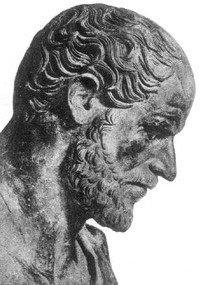
Class was great last night -- I enjoyed it. It was good (any dissenting opinions? No? C'mon, I know there is.). Nan commented that afterwards she felt like she had been recreating (as in recreation) -- and I must agree, the mental exercise pumped me up physically as if I had been using my muscles for more than Herman Göring impressions (Goering for all you Germanically impaired) or sticking my hand up Aristotle's dress.

But I have a problem. I want to accept Aristotle's words, but cannot at this point. I'll keep trying, and that's what this post is . . . an attempt to let you all get a little further into my head so you can figure out where I'm going astray.

I can totally agree with everything Aristotle has said to this point . . . everything. All that needs be done is birth me into the elite class. As long as I am elite, and there are rational reasons to maintain my natural born eliteness . . . I can agree with Aristotle on his whole scheme of virtues and vices.

Of course, looking at two vicious extremes is very much the way to find the good path . . . if you're elite. It gets a little harder when you're not . . . elite, that is. Y'see . . . if I'm elite, then somebody else has to be at the vicious extremes . . . and all along the spectrum of viciousness . . . for me to see and rationalize my path through the viciousness and onto the path of virtue, that leads ever upward to The Good. It certainly wouldn't do for me, an elite, to actually go out there and experience those vicious extremes . . . that's the job of the vulgar people -- those poor unfortunates who, try as they will, can never attain a life of virtue. It's their job to mark the path for the elites. The only reason an elite treads those vicious paths is through temporary ignorance.

"See, my brothers and sisters," saith one Elite to a magnificent assemblage of (male) humanity, "truely these lowborn are merely facsimiles of us. Their actions and desires are like unto the animals. Emotions toss their insignificant lives onto the rocks of vice so we can see the dangers therein. That is their purpose -- to show us where not to go. Let them flounder, it's what they do best. They would never be happy living our lives . . . they just don't understand. They can't comprehend. They don't realize!"

No way, José!

First of all . . . I do not claim high birth (though maybe, just maybe, in my wildest dreams, I'm related to that Edward, The Black Prince), nor do I claim an intellect as good as Aristotle or his colleagues. I am guilty of emotional excesses & rational deficiencies and rational excesses & emotional deficiencies, and will continue to have an abundance of emotional & rational escapades and rational & emotional lapses. I stand guilty of some of the most heinous of crimes, and have been duly punished (not as much as I should have been . . . but that's another story, one about Justice). I have hurt people; both those who deserved to be hurt and those who deserved naught but kindness from me. I can hurt you. Ain't nobody immune.

I reject any person's authority over me. I reject the notion that the elites are naturally sane and rational, and the unwashed masses are naturally handicapped in some way(s) mental, emotional, spiritual or physical. I reject the notion that animals are less than humans -- more correctly, I reject the notion that humans are more than animals. I reject a whole hell of a lot, actually. But I also accept a whole lot more than any group of elites will ever accept.

I accept that every human can be virtuous, and end up living a virtuous life even if they're crazy (Hey, Francis of Assisi, you really oughta stop flagellating yourself naked in the snow!). I accept that there are humans who are evil -- I've met a few, and the feeling (yes, Aristotle, FEELING, EMOTION) is immediately communicated, recognizable and palpable, undeniable and frightening. These evil people I have met have been the most coldly calculating, rational humans I have ever encountered. Do not make the mistake I speak of people without feelings . . . oh no . . . these evil people I've met certainly did have the full range of feelings we all have. That's the most scary part. You can see it all in their eyes (yes you can, Aristotle) as they take your measure, figure out what pleasure you can be to them, and weigh the enjoyment of your pain against possible consequences.

Evil.

Evil is real. Evil is in all of us.

I accept that even these most evil of people can find the virtuous human within them. Believe me, I've ran with gangs, lived in maximum/medium/minimum security prisons and met the whole range . . . on a personal and intimate long-term basis. I have wasted the days, weeks, months and even years away with winos, bums, schizophrenics, manic-depressives, obsessive-compulsives, anorexics, bulemics, common drunks, the shell-shocked and common & uncommon criminals, etcetera (even a catatonic . . . during my time in the nut house). I have counted among my friends: murderers, child molesters, rapists, bank robbers, muggers, gangbangers, women-beaters, gay bashers, felons & punks of all descriptions, prostitutes, drug dealers, pious religious fanatics and even a bona-fide Mafioso. I can count numerous victims of the above people (including the religious victims) as my friends as well. I have been both victim and perpetrator, perpetrator and victim. I have done bad things, even evil things -- and I knew what I was doing when I did them. I expect everybody knows when they are doing bad things -- don't give me no shit about involuntary or nonvoluntary actions, or even acting out of ignorance. That ain't it. That's an excuse for the elites. You know. Period.

Oh, in case anyone is worried . . . I have been punished (or excused) for all the crimes I have committed the state recognizes. I am not a wanted man. I have paid my debts to society . . . have you? Leave that be. This is philosophy here. Philosophy of the Ordinary Life.

Be honest -- you know, and actually decide and like, the things you do that are, shall we say, not exactly virtuous. Don't you? I do. Is anyone gonna say I am extraordinary? Pshaw! I am so pissin' ordinary you can hang a sign on me -- Typical Specimen of the Unwashed Masses. I've got the past to prove it. Ain't nowhere I hung around with anyone special, anyone better, anyone super, anyone worse, anyone different. I've seen a lot of humans, even a few born-elites up close and personal as friends, and all were readily recognizable by their actions as ordinary humans. None looked at me any differently. OK, maybe some did, but it wasn't with awe, I can tell you that much.

We all feel the same to me. Am I wrong?

If I'm right, then there is a way to reach everyone who is capable of performing the basic necessities of survival -- there is a way for each of us to find the path to a virtuous life. If there isn't . . . if virtue is just for the elite . . . I don't want no part of it. I like the people I've met in the unwashed masses. I understand them. I am one of them.

So . . . why does looking at two vicious extremes to find the virtuous mean unsettle me? Maybe because I've been out there on the extremes . . . and lemme tell ya, ain't no different from the mean. It's still about viciousness, not virtue. And besides . . . I found some of the best and goodest, kindest and caring, intelligent and wise, people suffering out there on the extremes of vice. I'll not leave them behind no matter what rules Aristotle or anyone else lays down . . . including your god.

Tuesday, March 6, 2007

I Don't Want To Be Magnificent!

Isn't it painfully obvious that maniacs are in control of our society? Isn't it painfully obvious that we suffer like ignorant, cowardly slaves? Isn't it painfully obvious that we hate each other? Isn't it painfully obvious we care only for our own comfort? Isn't it painfully obvious that male magnificence is a rich man's lie? Isn't it painfully obvious we never listened to our mothers? Isn't it painfully obvious we love being vicious? Isn't it painfully obvious that we need to be punished?

You can keep your magnificence. I'd rather hug my grandmother.

The Mothers of the Plaza de Mayo
http://www.madres.org/
http://www.labournet.net/world/0001/mum1.html
http://www.easybuenosairescity.com/biografias/madres1.htm
http://ipsnews.net/news.asp?idnews=36444


Where These Magnificent Women Go
http://www.tribuna.islagrande.cu/patriotas/opini/adondei.htm

Plaza de Mayo
http://www.moon.com/planner/argentina/mustsee/plaza_mayo.html

Monday, March 5, 2007

Socrates Is Dead, Long Live Socrates!

On this day, some say, in 399 BC the philosopher Socrates stood before a jury of 500 of his fellow Athenians accused and judged of refusing to recognize the gods recognized by the state and of corrupting the youth.“The greatest way to live with honor in this world
is to be what we pretend to be.”

[Plato, Meno]
[96c]

Socrates

And if there are no teachers, there can be no disciples either?

Meno

I think that statement is true.

Socrates

And we have admitted that a thing of which there are neither teachers nor disciples cannot be taught?

Meno

We have.

Socrates

So nowhere are any teachers of virtue to be found?

Meno

That is so.

Socrates

And if no teachers, then no disciples?

Meno

So it appears.

Socrates

Hence virtue cannot be taught?

[96d]

Meno

It seems likely, if our investigation is correct. And that makes me wonder, I must say, Socrates, whether perhaps there are no good men at all, or by what possible sort of process good people can come to exist?

Socrates

I fear, Meno, you and I are but poor creatures, and Gorgias has been as faulty an educator of you as Prodicus of me. So our first duty is to look to ourselves, and try to find somebody who will have some means or other of making us better. [96e] I say this with special reference to our recent inquiry, in which I see that we absurdly failed to note that it is not only through the guidance of knowledge that human conduct is right and good; and it is probably owing to this that we fail to perceive by what means good men can be produced.

Meno

To what are you alluding, Socrates?

Socrates
I mean that good men must be useful: we were right, were we not, in admitting that [97a] this must needs be so?

Meno

Yes.

Socrates

And in thinking that they will be useful if they give us right guidance in conduct: here also, I suppose, our admission was correct?

Meno

Yes.

Socrates

But our assertion that it is impossible to give right guidance unless one has knowledge looks very like a mistake.

Meno

What do you mean by that?

Socrates

I will tell you. If a man knew the way to Larisa, or any other place you please, and walked there and led others, would he not give right and good guidance?

Meno

Certainly.

[97b]

Socrates

Well, and a person who had a right opinion as to which was the way, but had never been there and did not really know, might give right guidance, might he not?

Meno

Certainly.

Socrates

And so long, I presume, as he has right opinion about that which the other man really knows, he will be just as good a guide--if he thinks the truth instead of knowing it--as the man who has the knowledge.

Meno

Just as good.

Socrates

Hence true opinion is as good a guide to rightness of action as knowledge; and this is a point we omitted just now in our consideration of the nature of virtue, [97c] when we stated that knowledge is the only guide of right action; whereas we find there is also true opinion.

Meno

So it seems.

Socrates

Then right opinion is just as useful as knowledge.

Meno

With this difference, Socrates, that he who has knowledge will always hit on the right way, whereas he who has right opinion will sometimes do so, but sometimes not.

Socrates

How do you mean? Will not he who always has right opinion be always right, so long as he opines rightly?

Meno

It appears to me that he must; and therefore I wonder, Socrates, [97d] this being the case, that knowledge should ever be more prized than right opinion, and why they should be two distinct and separate things.

Socrates

Well, do you know why it is that you wonder, or shall I tell you?

Meno

Please tell me.

Socrates

It is because you have not observed with attention the images of Daedalus. But perhaps there are none in your country.

Meno

What is the point of your remark?

Socrates

That if they are not fastened up they play truant and run away; but, if fastened, they stay where they are.

[97e]

Meno

Well, what of that?

Socrates

To possess one of his works which is let loose does not count for much in value; it will not stay with you any more than a runaway slave: but when fastened up it is worth a great deal, for his productions are very fine things And to what am I referring in all this? To true opinion. For these, so long as they stay with us, are a fine possession, [98a] and effect all that is good; but they do not care to stay for long, and run away out of the human soul, and thus are of no great value until one makes them fast with causal reasoning. And this process, friend Meno, is recollection, as in our previous talk we have agreed. But when once they are fastened, in the first place they turn into knowledge, and in the second, are abiding. And this is why knowledge is more prized than right opinion: the one transcends the other by its trammels.

Meno

Upon my word, Socrates, it seems to be very much as you say.

[98b] Socrates

And indeed I too speak as one who does not know but only conjectures: yet that there is a difference between right opinion and knowledge is not at all a conjecture with me but something I would particularly assert that I knew: there are not many things of which I would say that, but this one, at any rate, I will include among those that I know.

Meno

Yes, and you are right, Socrates, in so saying.

Socrates

Well, then, am I not right also in saying that true opinion leading the way renders the effect of each action as good as knowledge does?

Meno

There again, Socrates, I think you speak the truth.

[98c]

Socrates

So that right opinion will be no whit inferior to knowledge in worth or usefulness as regards our actions, nor will the man who has right opinion be inferior to him who has knowledge.

Meno

That is so.

Socrates

And you know that the good man has been admitted by us to be useful.

Meno

Yes.

Socrates

Since then it is not only because of knowledge that men will be good and useful to their country, where such men are to be found, but also on account of right opinion; and since neither of these two things--knowledge 98d] and true opinion--is a natural property of mankind, being acquired--or do you think that either of them is natural?

Meno

Not I.

Socrates

Then if they are not natural, good people cannot be good by nature either.

Meno

Of course not.

Socrates

And since they are not an effect of nature, we next considered whether virtue can be taught.

Meno

Yes.

Socrates

And we thought it teachable if virtue is wisdom?

Meno

Yes.

Socrates

And if teachable, it must be wisdom?

Meno

Certainly.

Socrates

And if there were teachers, it could be taught, [98e] but if there were none, it could not?

Meno

Quite so.

Socrates

But surely we acknowledged that it had no teachers?

Meno

That is true.

Socrates

Then we acknowledged it neither was taught nor was wisdom?

Meno

Certainly.

Socrates

But yet we admitted it was a good?

Meno

Yes.

Socrates

And that which guides rightly is useful and good?

Meno

Certainly.

Socrates
And that there are only two things--[99a] true opinion and knowledge--that guide rightly and a man guides rightly if he have these; for things that come about by chance do not occur through human guidance; but where a man is a guide to what is right we find these two things--true opinion and knowledge.

Meno

I agree.

Socrates

Well now, since virtue is not taught, we no longer take it to be knowledge?

Meno

Apparently not.

[99b]

Socrates

So of two good and useful things one has been rejected: knowledge cannot be our guide in political conduct.

Meno

I think not.

Socrates

Therefore it was not by any wisdom, nor because they were wise, that the sort of men we spoke of controlled their states--Themistocles and the rest of them, to whom our friend Anytus was referring a moment ago. For this reason it was that they were unable to make others like unto themselves--because their qualities were not an effect of knowledge.

Meno

The case is probably as you say, Socrates.

Socrates

And if not by knowledge, as the only alternative it must have been by good opinion. [99c] This is the means which statesmen employ for their direction of states, and they have nothing more to do with wisdom than soothsayers and diviners; for these people utter many a true thing when inspired, but have no knowledge of anything they say.

Meno

I daresay that is so.

Socrates

And may we, Meno, rightly call those men divine who, having no understanding, yet succeed in many a great deed and word?

Meno

Certainly.

Socrates

Then we shall be right in calling those divine of whom [99d] we spoke just now as soothsayers and prophets and all of the poetic turn; and especially we can say of the statesmen that they are divine and enraptured, as being inspired and possessed of God when they succeed in speaking many great things, while knowing nought of what they say.

Meno

Certainly.

Socrates

And the women too, I presume, Meno, call good men divine; and the Spartans, when they eulogize a good man, say--“He is a divine person.”

[99e]

Meno

And to all appearance, Socrates, they are right; though perhaps our friend Anytus may be annoyed at your statement.

Socrates

For my part, I care not. As for him, Meno, we will converse with him some other time. At the moment, if through all this discussion our queries and statements have been correct, virtue is found to be neither natural nor taught, but is imparted to us by a divine dispensation without understanding in those who receive it, [100a] unless there should be somebody among the statesmen capable of making a statesman of another. And if there should be any such, he might fairly be said to be among the living what Homer says Teiresias was among the dead--“He alone has comprehension; the rest are flitting shades.” In the same way he on earth, in respect of virtue, will be a real substance among shadows.

Meno, by Plato:
http://www.gutenberg.org/etext/1643

Apology, by Xenophon:
http://www.gutenberg.org/dirs/etext98/aplgy10.txt

The Trial and Death of Socrates:
http://www.age-of-the-sage.org/greek/philosopher/trial_death_socrates.html


Socrates sought a singular virtue for human life. Plato identified four central virtues present in the ideal state or person. Aristotle holds that every moral virtue is the mean between vicious extremes.

"Crito, we owe a cock to Asclepius. Do pay it. Don't forget."

Saturday, March 3, 2007

Benevolence, Beneficence, Munificence . . .

Benevolence (Be*nev"o*lence) (?), n.
[OF. benevolence, L. benevolentia. See Benevolent.]

The Benevolent Goddess, Kali

1. The disposition to do good; good will; charitableness; love of mankind, accompanied with a desire to promote their happiness. "The wakeful benevolence of the gospel." Chalmers.
2. An act of kindness; good done; charity given.
3. A species of compulsory contribution or tax, which has sometimes been illegally exacted by arbitrary kings of England, and falsely represented as a gratuity.

Synonyms -- Benevolence, Beneficence, Munificence. Benevolence marks a disposition made up of a choice and desire for the happiness of others. Beneficence marks the working of this disposition in dispensing good on a somewhat broad scale. Munificence shows the same disposition, but acting on a still broader scale, in conferring gifts and favors. These are not necessarily confined to objects of immediate utility. One may show his munificence in presents of pictures or jewelry, but this would not be beneficence. Benevolence of heart; beneficence of life; munificence in the encouragement of letters.
the above is from http://www.selfknowledge.com/9171.htm

I'll meet you at the Agora.

Ruins in Athens May Be an Ancient Market

March 3, 2007

ATHENS, Greece (AP) - Archaeologists have discovered extensive remains of what is believed to be an ancient marketplace with shops and a religious center at the southern edge of Athens, the Culture Ministry said Friday. The finds, in the coastal neighborhood of Voula, date from the 4th or 5th century B.C.

"It is a very large complex," the ministry said. "It was a site of rich financial and religious activity, which was most probably a marketplace."

Marketplaces _ or agoras _ teemed with shops, open-air stalls and administrative buildings, and were the financial, political and social center of ancient Greek life.

Archaeologists believe the complex belonged to the municipality of Aexonides Halai, among the largest settlements surrounding ancient Athens.

The main building was a hollow square with a rock-cut reservoir in the center. The building had 12 rooms _ probably shops _ and a small temple with an open-air altar.

Finds included large quantities of pottery, coins and lead weights that would have been used in transactions by traders.

Last month, archaeologists discovered an ancient theater in the northwestern Athens suburb of Menidi.


Copyright 2006 The Associated Press.

Friday, March 2, 2007

Munificent?


OK, we were talking about munificence as magnificent behaviour last Tuesday, weren't we? Don't be shy, I'm wrong more often than I'm right . . . and I'd rather be told I'm wrong before I find out the hard way.

=====
mu·nif·i·cent
[myoo-nif-uh-suhnt]
–adjective
1.extremely liberal in giving; very generous.
2.characterized by great generosity: a munificent bequest.

[Origin: 1575–85; back formation from L mūnificentia generosity, munificence, equiv. to mūnific(us) generous (muni-, comb. form of mūnus gift + -ficus -fic) + -entia -ence]

mu·nif·i·cence, mu·nif·i·cent·ness, noun
mu·nif·i·cent·ly, adverb

1. bountiful, bounteous, lavish. See generous.
1. niggardly.

mu·nif·i·cent
adj.
  1. Very liberal in giving; generous.
  2. Showing great generosity: a munificent gift. See Synonyms at liberal.

[Latin mūnificēns, mūnificent-, from mūnificus : mūnus, gift; see mei-1 in Indo-European roots + facere, to make; see fact.]

mu·nif'i·cence n., mu·nif'i·cent·ly adv.


munificence
c.1425, from M.Fr. munificence, from L. munificentia, from comp. stem of munificus "generous, bountiful, liberal," lit. "present-making," from munus (gen. muneris) "gift or service, duty, office" (see municipal) + unstressed stem of facere "to do" (see factitious).

munificence

noun
liberality in bestowing gifts; extremely liberal and generous of spirit


munificence (n)


Synonyms: generosity, largesse, benevolence, kindness, philanthropy, bounty, charity, magnanimousness

Antonym:
miserliness


munificent (adj)


Synonyms: generous, bountiful, liberal, magnanimous, unstinting, unsparing, openhanded, freehanded, charitable

Antonym:
miserly

Thursday, March 1, 2007

Hera Found!


Greek Archaeologists Find Hera Statue

March 1, 2007

By COSTAS KANTOURIS

THESSALONIKI, Greece (AP) - A 2,200-year-old statue of the goddess Hera has been found built into the walls of a city under Mount Olympus, home of Greece's ancient gods, archaeologists said on Thursday (Ed Note, Aristotle died 2,329 years ago). The headless marble statue was discovered last year during excavations in the ruins of ancient Dion, some 53 miles southwest of Thessaloniki.

Archaeologist Dimitris Pantermalis said the life-sized _ by human dimensions _ statue had been used by the early Christian inhabitants of Dion as filling for a defensive wall.

He said the 2nd century B.C. find appeared to have originally stood in a temple of Zeus, head of the ancient Greek gods _ whose statue was found in the building's ruins in 2003 and after whom Dion was named.

"We have reached the conclusion that the statue of Hera stood next to that of Zeus in the temple," said Pantermalis, a Thessaloniki University professor who has headed excavations at Dion for more than three decades.

Hera was the long-suffering wife of Zeus, a notorious philanderer, according to ancient mythology.

"The statue represents a female form seated on a throne, and is made of thick-grained marble like the one of Zeus," Pantermalis said. "It shows exactly the same technique and size, which led us to link the two statues beyond doubt."

Pantermalis said that, if confirmed, it would be the first time two statues of different gods have been located from a single temple in Greece. He said it was also possible that a statue of Athena, goddess of wisdom, could have stood in the temple of Zeus, and expressed hopes it might be discovered during future excavations.

Dion was a major religious center of the ancient Macedonians. Alexander the Great offered sacrifices there before launching his victorious campaign against the Persian Empire in the 4th century B.C.

Excavations so far have revealed temples, theaters and a stadium, city walls, a hotel, baths and streets with an elaborate drainage system, as well as many statues.

The area was first inhabited during the Iron Age, and survived into early Christian times when it was the seat of a bishop.

Pantermalis will present the find on Friday, during a three-day archaeological conference that opened in Thessaloniki Thursday.

Copyright 2006 The Associated Press. All rights reserved.

Wednesday, February 28, 2007

Magnificence?


mag·nif·i·cence
(măg-nĭf'ĭ-səns)
noun, definition
  1. Greatness or lavishness of surroundings; splendor.
  2. Grand or imposing beauty.
  3. splendid or imposing in size or appearance
    Synonyms: impressiveness, grandness

  4. the quality of being magnificent or splendid or grand
    Synonyms: brilliance, splendor, splendour, grandeur, grandness

synonyms

    Brilliant, showy splendor: brilliance, brilliancy, glitter, glory, gorgeousness, grandeur, grandness, resplendence, resplendency, sparkle, splendour, sumptuousness.
    See beautiful/ugly.
antonyms
cheapness, tawdriness

This ain't what we're talking about . . . or is it? Are we talkin' beneficence? No . . . but let's take a look at beneficence anyway . . .

. . . from the Encyclopedia of Public Health (information is everywhere):

Beneficence

In public health, the governing ethical theory is utilitarianism, meaning "doing the greatest good for the largest number of people." Beneficence is strongly tied to the utilitarian theory of ethics. It is one of four principles considered in medicine and public health under the principle-based approach to ethical analysis. The other three principles are: respect for autonomy, nonmaleficence, and distributive justice. Beneficence is the professional duty to do or produce good. By "good" is meant the performance of acts of kindness and charity. "Doing good" is considered virtuous conduct. Ultimately, beneficence is the duty to do more good than harm through public health actions because, in practice, no action in public health will have exclusively beneficial effects. For example, if a public health agency becomes aware of a person infected with a bacterium that could be spread through the air, then, there is, on the one hand, a duty to respect the person's right to confidentiality and freedom of movement. But, on the other hand, there is a greater duty to prevent the spread of the bacterium to other people. Thus, more good would be achieved by protecting the public health, which can be accomplished only by breaching the duty to maintain the infected person's confidentiality and freedom of movement. Such breaches would occur only to reduce the risk associated with permitting the infectious person to put others at risk of infection (e.g., through quarantine or confinement, with a consequent loss of privacy in terms of the diagnosis). The ethical dilemma for decision makers in public health lies in weighing the pros and cons between at least two conflicting options: protecting the individual's rights or protecting the public health. Such breaches of an individual's rights are rare in public health and are undertaken only with maximum discretion.

(SEE ALSO: Autonomy; Ethics of Public Health; Nonmaleficence; Paternalism)

Bibliography

Beauchamp T. L., and Childress, J. F. (1994). Principles of Biomedical Ethics, 4th edition. New York: Oxford University Press.

---------------------------------------------------------------

So . . . where am I? Magnificence . . . somebody, anybody?

Friday, February 16, 2007

The Good is Often the Enemy of the Best


. . . thoughts on the mean, and thus virtue, in the real world of baseball . . .


http://baseballguru.com/lheaphy/analysislheaphy03.html


. . . which is an excerpt from: Baseball & Philosophy: Thinking Outside the Batter's Box, edited by Eric Bronson, Open Court Publishing, March, 2004, Women Playing Hardball by Leslie Heaphy

other links:

http://www.briomag.com/briomagazine/reallife/a0004603.html
http://www.baseballlibrary.com/baseballlibrary/submit/Sepulveda_Richard_Lefty1.stm
http://www.findarticles.com/p/articles/mi_m1208/is_n14_v217/ai_14960870
http://www.baseball-reference.com/bullpen/Ila_Borders
http://www.opencourtbooks.com/books_n/baseball.htm
http://www.ronniewoowoo.com/weeklyUpdate.htm

Dionysian Theatre of Acharnai Discovered

Greek Archaeologists Discover Theater

8:27 PM ET February 15, 2007

By NICHOLAS PAPHITIS

ATHENS, Greece (AP) - Sections of an ancient Greek theater were discovered on Thursday during construction work in an Athens suburb, archaeologists said.

Until now, only two such buildings were known in the ancient city where western theater originated more than 2,500 years ago.

Fifteen rows of concentric stone seats have been located so far in the northwestern suburb of Menidi, according to Vivi Vassilopoulou, Greece's general director of antiquities.

"Another section appears to lie under a nearby road," she told The Associated Press.

"(The remains) were discovered during excavation work, supervised by archaeologists, for a new building," Vassilopoulou said. "But it is still very early to offer any conclusions."

The structure has not yet been dated, and further details are expected to emerge following a full excavation.

Menidi is thought to be built over the ancient village of Acharnae, the largest of a string of rural settlements outside ancient Athens. Ancient writers mention a theater at Acharnae, but no traces of it had been found until now.

The village was linked with Dionysos, the ancient god of theater and wine, as the Athenians believed that ivy _ his sacred plant _ first grew there.

Built in semicircular tiers on hillsides, ancient theaters were monumental, open-air structures that could seat thousands of spectators.

Theater first emerged as an art form in late 6th century B.C. Athens, where ancient playwrights competed for a prize during the annual festival of Dionysos _ in whose cult the art originated.

The works of Sophocles, Aeschylus, Euripides and Aristophanes were performed in the theater of Dionysos under the Acropolis.

Originally a terrace where spectators sat on the bare earth above a circular stage, it was rebuilt in stone during the 4th century B.C. and could sit up to 14,000 people.

Another smaller theater has been discovered in southern Athens.

Thursday, February 15, 2007

Philosopher Death Match: Aristotle vs Mae West

Mae West's philosophy reflects a working-class sensibility, wittily attuned to prevalent male attitudes and realities toward women, work, sexuality and life. West sees wisdom residing in regular folks who must live through the harshness of everyday life. West trashes the notion that it is the elite who know what is real, hence ethical and hence good, in life. West recognizes that emotion is more powerful and satisfying than reason, and reason, on its own, is ridiculously lacking in answers. In all realms, emotion has a claim to parity with, and authority over, reason.


Surviving fragments of the West Philosophy:

I am all woman.

You only live once, but if you do it right, once is enough.

It's not what I do, but the way I do it. It's not what I say, but the way I say it.

It's not what you get that counts, but what you give.

When choosing between two evils, I always like to try the one I've never tried before.

Whenever I'm caught between two evils, I take the one I've never tried.

Between two evils, I always pick the one I never tried before.

I'll try anything once, twice if I like it, three times to make sure.

I never loved another person the way I loved myself.

Sex is emotion in motion.

Virtue has its own reward, but no sale at the box office.

Those who are easily shocked should be shocked more often.

It ain't no sin if you crack a few laws now and then, just so long as you don't break any.

I expect it'll
(going to prison) be the making of me.

The time I spent in jail was about the most profitable days of my life.

Too much of a good thing can be wonderful.

When I'm good, I'm very good. But when I'm bad I'm better.

I wrote the story myself. It's about a girl who lost her reputation and never missed it.

If I asked for a cup of coffee, someone would search for the double meaning.

It is better to be looked over than overlooked.

A hard man is good to find.

A man can be short and dumpy and getting bald but if he has fire, women will like him.

A man has one hundred dollars and you leave him with two dollars, that's subtraction.

A man's kiss is his signature.

An ounce of performance is worth pounds of promises.

Anything worth doing is worth doing slowly.

Give a man a free hand and he'll run it all over you.

Good sex is like good bridge. If you don't have a good partner, you'd better have a good hand.

He who hesitates is a damned fool.

He who hesitates is last.

He's the kind of man a woman would have to marry to get rid of.

Right now I think censorship is necessary; the things they're doing and saying in films right now just shouldn't be allowed. There's no dignity anymore and I think that's very important.

I believe in censorship. I made a fortune out of it.

I generally avoid temptation unless I can't resist it.

I like restraint, if it doesn't go too far.

I never worry about diets. The only carrots that interest me are the number you get in a diamond.

I only have 'yes' men around me. Who needs 'no' men?

I only like two kinds of men, domestic and imported.

I used to be Snow White, but I drifted.

It's hard to be funny when you have to be clean.

It's not the men in my life that count, it's the life in my men.

Keep a diary, and someday it'll keep you.

Marriage is a great institution. No family should be without it.

Marriage is a great institution, but I'm not ready for an institution.

We don't think about marriage as something going on and on, with children from generation to generation. It's often just a passing whim.

I'm single because I was born that way.

A dame that knows the ropes isn't likely to get tied up.

One and one is two, and two and two is four, and five will get you ten if you know how to work it.

Save a boyfriend for a rainy day - and another, in case it doesn't rain.

Say what you want about long dresses, but they cover a multitude of shins.

She's the kind of girl who climbed the ladder of success wrong by wrong.

Ten men waiting for me at the door? Send one of them home, I'm tired.

To err is human, but it feels divine.

Too much of a good thing can be taxing.

I feel like a million tonight, but one at a time.

When women go wrong, men go right after them.

It's (sexual relationships) just this physical thing.

I like the kinda comedy that imitates me.

Anytime you take religion for a joke, the laugh's on you.

I"m going to drown, down in those troubled waters (religion), they're creeping around my soul.

It takes two to get one in trouble.

These girls (prostitutes) are willing to work, but how can they when the law is always ready to pounce on them and send them back to the Workhouse?

Find'em, fool'em and forget'em.

I'm no angel, but I've spread my wings a bit.

A man in the house is worth two in the street.

I'm a woman of very few words, but lots of action.

Too many girls follow the line of least resistance--but a good line is hard to resist.

Some men are all right in their place--if they only knew the right places!

Every man I meet wants to protect me. I can't figure out what from.

Any time you got nothing to do--and lots of time to do it--come on up.

Men are all alike--except the one you've met who's different.

Don't marry a man to reform him - that's what reform schools are for.

All discarded lovers should be given a second chance, but with somebody else.

The score never interested me, only the game.

Men are my hobby, if I ever got married I'd have to give it up.

Is that a gun in your pocket, or are you just glad to see me?

I'm no model lady. A model's just an imitation of the real thing.

Women with "pasts" interest men because men hope that history will repeat itself.

Opportunity knocks for every man, but you have to give a woman a ring.

There are no withholding taxes on the wages of sin.

The best way to learn to be a lady is to see how other ladies do it.

Let men see what's coming to them, and women will get what's coming to them.

The curve is more powerful than the sword.

I didn't discover curves; I only uncovered them.

I like a man who's good, but not too good--for the good die young, and I hate a dead one.

Some women pick men to marry--and others pick them to pieces.

A woman in love can't be reasonable--or she probably wouldn't be in love.

You can do what you want, but saving love doesn't bring any interest.

Love isn't an emotion or an instinct--it's an art.

Love conquers all things except poverty and toothache.


Love is the only industry which can't operate on a five-day week.

Women want certain things in marriage--the right to a title and a front seat in the lap of luxury.

Men are easy to get but hard to keep.

It's easy to get married, but hard to stay that way.

Kiss and make up--but too much makeup has ruined many a kiss.

A girl in the convertible is worth five in the phone book.

Life's just a merry-go-round. Come on up. You might get a brass ring.

You may admire a girl's curves on the first introduction, but the second meeting shows up new angles.

I take it out in the open and laugh at it.

The best way to hold a man is in your arms.

Brains are an asset to the woman in love who's smart enough to hide 'em.

Look your best--who said love is blind?

Girls, give all your gentlemen friends an even break, even if you have to break them in the attempt.

Cultivate your curves--they may be dangerous but they won't be avoided.

Love thy neighbor--and if he happens to be tall, debonair and devastating, it will be that much easier.

If you put your foot in it, be sure it's your best foot.

It's all right for a perfect stranger to kiss your hand as long as he's perfect.

The best way to behave is to misbehave.

Don't ever make the same mistake twice, unless it pays.


A man has more character in his face at forty than at twenty--he has suffered longer.

Don't come crawlin' to a man for love--he likes to get a run for his money.

Don't cry for a man who's left you--the next one may fall for your smile.

Don't keep a man guessing too long--he's sure to find the answer somewhere else.

Never ask a man where's he's been. If he's out on legitimate business, he doesn't need an alibi. And, girls, if he has been out on illegitimate business, it's your own fault.

Some of the wildest men make the best pets.

Let the crooks look out for themselves.

I've got to do it (speak out) as a citizen. i've got to do it for society. They (gangsters) threaten us under penalty of having acid thrown in our faces, and they don't stop at threats either.

I'm the first personality since Chaplin that's got the masses. I've got all classes and all ages.

I've been rich and I've been poor. Believe me, rich is better.

Did they expect a sermon? Why weren't they in church if they were so religious?

Goodness had nothing to do with it.

Yeah, honey, but you can't prove a thing.


http://www.marxists.org/subject/women/authors/forsythe/mae.htm
http://www.adherents.com/people/pw/Mae_West.html

Where Is Your Reality Now?

'nuff said

http://womensbioethics.blogspot.com/2007/01/first-us-uterus-transplant-planned-is.html
http://commentisfree.guardian.co.uk/natalie_bennett/2006/12/congo_the_inhumanity_of_men.html
http://www.msnbc.msn.com/id/15704030/site/newsweek/
http://ourbodiesourblog.org/blog/2007/01/pregnancy_by_any_means_necessary.php

Wednesday, February 14, 2007

Let's be honest, it's Luperca'lia.

Happy Luperca'lia!


http://penelope.uchicago.edu/Thayer/E/Roman/Texts/secondary/SMIGRA*/Lupercalia.html

Monday, February 12, 2007

Homework 02/13/07

Aristotle exclaims that the goal of the individual is happy fulfillment (eudaimonia). He gives a dissertation on the different things we call by the name of happiness, and then accepts or rejects them as being true happiness. He shows that good is preferable over bad, and that good brings happiness and fulfillment while bad brings unhappiness and unfulfillment. The goal of the philosophy of ethics is to instruct the individual on how best to determine good and bad things. Aristotle explains that we all want more good in our lives so that we can be more happily fulfilled. Thus a life of happy fulfillment, eudaimonia, is good. Then we can say that the goal of the philosophy of politics is to use the results from the philosophy of ethics, and all the other philosophies, to instruct people on how best to strive together for the greater good – a greater Eudaimonia.


Firstly, the philosophy must define its terms and put them in some sort of order so that all aspects of a good life can be examined. He is laying the foundation of the science. He walks through the definition and ordering process for us so we can apply it to these, and other, things. Aristotle explains that there is not a single great and divine Good, but actually an orderly set of little goods that if coordinated to the same goal amount to a greater good. Doing a thing correctly is good. Doing little things correctly are little goods, and big things done correctly are big goods. All big goods are actually complicated arrangements of many little goods which, when each is done well, automatically advances one toward a greater good. When doing a thing no longer leads to a greater thing, but is an end in itself – we have reached the highest good that all those subordinated little goods were aiming for.


In the case of emotions, Aristotle describes a way to discern the best actions. He describes the soul of man has having two parts: the rational and the irrational, reason and emotion. All of our desires and passions well forth from our emotions. The goal of the moral man is to make these emotions subordinate to the wishes of reason. If the emotions are left to find their own way the result will be less than good, and perhaps downright bad. Aristotle relates that when we make choices purely on the basis of pleasure or pain we will find that the pleasurous does not always lead to the good, and the painful does not always lead away from the good. He shows examples to highlight his thought. Generally, the immature and ordinary man will let pleasure and pain, and therefore a false sense of good and bad, lead him unknowingly down the path of vice instead of virtue. Aristotle introduces us to the mean in order to use reason to avoid pitfalls in navigating through the polarities of the vices. The mean is a point between two extremes of vice, not halfway but rather somewhere along the spectrum between deficiency and excess where the best attributes of the vice combines to form a virtue. These means between all the vices is the path of virtue, hence the way to the highest good. We use the mean in order to make virtuous choices, and thereby construct a good life from the repetition of virtuous acts. Repeating virtuous acts makes it easier to discern and perform future virtuous acts. But the individual needs guidance to choose the virtues of the greater good. Politics guides us in a community effort to build good lives for the greatest number of people, and hence, the greater good. Many good lives are more of a good thing, and thus a higher good, than one good life.


The choices we have to make are further made difficult because each situation is different. The mean (i.e. the virtuous, the good) of a situation changes with the particulars. The virtuous man can discern the truth in moral dilemmas, and choose to act correctly within the particular situation.


After we understand that an act of virtue or vice is a conscious choice, we then can use this freedom of choice to live the best life. The trick is applying the philosophy of politics to everyday life. Aristotle shows us that vices have two poles, excess and deficiency. Both excess and deficiency are bad things as they cause bad actions. Somewhere between excess and deficiency is the mean, and it is a good thing because it causes good actions:


the mean between cowardice and recklessness is courage.

the mean between self-indulgence and insensitivity is self-control.

the mean between extravagance and stinginess in giving is generosity.

the mean between stinginess and extravagance in taking is generosity.

the mean between meanness and vulgarity is magnificence.

the mean between vanity and smallmindedness is highmindedness.

the mean between ambitiousness and unambitiousness is the right amount of ambitiousness.

the mean between apathy and shorttemperedness is gentleness.

the mean between boastfulness and self-depreciation is truthfulness.

the mean between buffoonery and boorishness is wittiness.

the mean between grouchiness and obsequiousness is friendliness.

the mean between bashfulness and shamelessness is modesty.

the mean between envy and spite is righteous indignation.


To further describe one of the above examples: buffoonery is clownish, immature and prankish amusement, while boorishness is rude, insensitive and uncouth amusement. Wittiness, on the other hand, is ingenious insight into a situation that reveals an incongruity that evokes laughter. It is clear that in the matter of amusement, boorishness is the deficiency, buffoonery is the excess, and the mean is wittiness – characterized by its virtue of being not only funny, but insightful, and therefore good.


Aiming for the mean in our actions leads to a life of undeniable good, though the exact particulars of each and every action will not have the exact same characteristics. If there was an Absolute Good, as Plato thought, then all good actions must partake of the qualities of this Good. But if any undeniably good-resulting action can be demonstrated to be at odds with yet another undeniably good-resulting action, in regards to the particulars of the choices made, then there simply cannot be an absolute good. Good is fluid, not fixed. Nature is imperfect, and so is good.


Aristotle also teaches that in some emotions the mean is actually all the way over to one extreme, as in fear. Aristotle posits that along the spectrum of fear, the opposites are cowardice and courage. Courage being a mean of itself as Aristotle demonstrates with courage being the mean between cowardice and recklessness in the emotion of confidence. Therefore, despite the emotion and despite the distance between the extremes of that emotion, the mean remains the same.


The freedom of choice and the freedom to act upon those choices is a gift with a moral responsibility. Aristotle rejects the claim of Socrates that no man is willingly bad. Aristotle believes every man makes a conscious decision to be either bad or good, and realizes the consequences of the choice. Common law and history make it plain that because man has choice, he is obligated to choose correctly for the greater good. This also means that each man is personally responsible for the state of his own character, whether virtuous or vicious.


Silence of the lambs . . .


Alone, eh? You all, except Carrie, have decided not to post . . . even a comment, even to say: "Hey, Ed, you're nuts!" Fine. (Fucked-up, Insecure, Neurotic & Emotional). Not even an email of acknowledgement of being. Fine. Virtue or Viciousness? Slap me? Why shouldn't I slap you? Philosophy? Geez! Ya gotta say something to philosophize. Class is tomorrow . . . maybe I'll seeya there, and maybe not, but I won't be around this page for a while. It's all yours, have fun.

Sunday, February 11, 2007

Hello? Is there anybody else here?

Life Line
by Harry Nilsson

Down to the bottom,
Hello
Is there anybody else here?

It’s cold and I’m so lonely,
Hello!
Is there anybody else here?

Hello (Hello, Hello, Hello)
Won’t you throw me down a Life Line?
I’m so afraid of darkness,
And down here it’s just like night time.

Oobelie, Ooobely, Oogolie, Oogolie,
Oohs..Are all around me.
Hello!
Will you please send down a Life Line?

Down,
And there isn’t any hope for me,
Unless this dream which seems so real,
Is just a fantasy.